A brief follow-up to yesterday's post.
It is often said that we "live in a post-religious society." Or "post-Christian." I don't think this is necessarily true, at least not in the United States where 75% of the citizens identify with the Christian label.
A more accurate description might be "religiously illiterate." Individuals are ill-equipped to grapple with the complex and often confusing world of spirituality. So they either opt out entirely, or embrace an easy fundamentalism.
Most cannot name the four Gospels, or tell you who wrote the book of Corinthians. They could hardly identify the difference between a Catholic and Protestant, let alone a Sunni and Shiite. A 2000 Gallup poll shows that 70% of Americans believe "you can be religious without going to church." Is it any wonder that more people are choosing to tune out altogether?
Again, what is needed is a return to basics of the faith. Clear articulation of doctrine. A more widespread understanding of religion. Personally, I believe that Religious Studies ought to be a mandatory part of the high school curriculum. A mind that is well-educated about various religions and their denominations is more free to choose his or her path, not less.
I caught this hilarious skit from That Mitchell and Webb Look on BBC America:
Comedy aside, it makes some good points. Religious belief is becoming more "me" focused, rather than "we" focused. Our communities must reach out and embrace the "other." Without being jerks, of course! Which we Anglicans are quite good at.
There has been a shift away from the wealth of information found in a community, to the individual's personal interpretations and worldview.
Or, as the Vicar says, "You've thought about eternity for twenty-five minutes and think you've come to some interesting conclusions, have you?"
Showing posts with label theology. Show all posts
Showing posts with label theology. Show all posts
Thursday, April 30, 2009

Tuesday, April 21, 2009
Name Change - Part Deux
Serpentis Sacra. "Sacred Serpents."
A few months ago, I came across an article about a distant relative of mine - one I'm rather fond of. John Bramhall. Archbishop of Armagh, via media defender of the Anglican church against Puritans and Papists alike.
I felt a sense of kinship with John Bramhall that surpassed our common bloodline; He and I share many of the same theological and sociopolitical views. One of his books is entitled Serpent Salve. I first thought of Latin for "Holy Serpent." Quickly, I realized he meant ointment for a snake bite.
Even so, that is where the initial inspiration came from.
The snake is a complicated creature in Christian mythology and symbolism.
Even after his crucifixion and resurrection, the snake is displayed in churches solidly beneath the feet of Mary and Patrick, or else lurking about Paradise, an unwanted virus. This iconography is confusing at best, especially when displayed next to images of Christ-the-serpent.
The Israelites were bitten by the snake to receive healing from other bites. If Christ is the new serpent, then we have been bitten by him, and his venom inhabits our veins forever. His humanity is forever united to ours, and we participate in his divinity.
That symbolism is still bizarre.
You know, that's why I like it. The despised serpent has been raised up and redeemed. What once embodied fear is a symbol of hope. What once crawled on its belly now soars in the air.
We are to be holy serpents.

A few months ago, I came across an article about a distant relative of mine - one I'm rather fond of. John Bramhall. Archbishop of Armagh, via media defender of the Anglican church against Puritans and Papists alike.
I felt a sense of kinship with John Bramhall that surpassed our common bloodline; He and I share many of the same theological and sociopolitical views. One of his books is entitled Serpent Salve. I first thought of Latin for "Holy Serpent." Quickly, I realized he meant ointment for a snake bite.
Even so, that is where the initial inspiration came from.
The snake is a complicated creature in Christian mythology and symbolism.
- Satan tempts Eve under the guise of a serpent.
- Moses impales a (flying?) snake, commanding the children of Israel to gaze upon it; Whoever is bitten receives healing. Healing from the (flying) snakes that just bit them.
- Jesus refers to the Pharisees as a "brood of vipers."
- Christ's crucifixion echoes the piercing of the snake by Moses.
- Mary is often depicted crushing a snake beneath her feet, a sign that she is the "new Eve."
- St. Patrick is rumored to have driven poisonous asps from the fields of Ireland.
- Orthodox bishops adorn their episcopal staves with intercoiled snakes, as my friends at JN1034 pointed out.
Even after his crucifixion and resurrection, the snake is displayed in churches solidly beneath the feet of Mary and Patrick, or else lurking about Paradise, an unwanted virus. This iconography is confusing at best, especially when displayed next to images of Christ-the-serpent.

The Israelites were bitten by the snake to receive healing from other bites. If Christ is the new serpent, then we have been bitten by him, and his venom inhabits our veins forever. His humanity is forever united to ours, and we participate in his divinity.
That symbolism is still bizarre.
You know, that's why I like it. The despised serpent has been raised up and redeemed. What once embodied fear is a symbol of hope. What once crawled on its belly now soars in the air.
We are to be holy serpents.

Thursday, April 16, 2009
The Church Is Dying
...it's true.
And it needs a holy fire under it's ass if it expects to survive the upcoming generation.
I have heard the suggestion, "Maybe we need to let the Church die, so it can be resurrected." I'm not willing to let 2,000 years of history, wisdom and seeking go down the toilet. I'm certainly not about to let so-called "born again" Christianity take its place, both as a gay man and an Anglo-Catholic.
(A side note. These are totally disorganized, stream-of-consciousness ideas that have been floating around for a while, and I needed to exorcise them. Bear with my lack of organization, with sincere apologies from the author!)
So, here are a few suggestions.
Why are people drawn to evangelical churches?
Evangelicals have dumbed down the Gospel.
"Are you Saved? Say this prayer to be Saved. Read this book."
Easy. Simple.
This mistake results in a generation of evangelicals who know nothing about their faith except how they feel about it. There is, however, a lesson to be learned.
If you ask an Anglican what he or she believes, you're liable to get a lot of stammering and a generally unimpressive response. We need to be able to clearly, quickly, accurately and poignantly articulate our faith. This is no easy task. Summarizing years of experience and introspection is nearly impossible, but it must be done.
We believe that Jesus is fully God and fully human, that he came to restore our broken human nature through his reconciling ministry, death and subsequent resurrection. We believe that - in spite of everything - the Church he established continues with an unbroken line of apostolic authority through the Holy Spirit. We believe that God's grace flows freely from the church and indeed all creation.
Or something like that.
Which brings me to the next point...
I once met a lifelong, cradle Episcopalian who asked me what a diocese is. Forehead-to-desk action ensued.
This is not uncommon. Teaching must involve the basics of the Church - history, governance, liturgy, dogmas. We cannot afford to leave our members blatantly uneducated.

This must be both academic and a labor of the heart. We must encourage people to speak openly of their love for Jesus, and be receptive to hearing the faith of others with an open mind and heart. We are so uncomfortable with describing our relationship and journey with the divine.
More than ever, we need to understand why we believe in God at all. Most Christians are not converting to Hinduism or Buddhism, but rather losing interest in spirituality altogether. This is unacceptable.
We need to be able to articulate why we are Anglican and not Baptist, Roman Catholic, "born again" or even Lutheran. This is very different from saying "you're right, and I'm wrong." It's simply a matter of being able to accurately communicate your beliefs.
For example, I have tremendous respect for the Roman Catholic church, believe it to be one of the branches of the ancient Church, and accept the Bishop of Rome as the successor of St. Peter and first among equals. However, I respectfully argue that Papal authority is too far-reaching, that ecumenical councils after the 7th are invalid because of their noninclusive nature, and that many of the Roman Church's social teachings are in serious need of re-examination and correction.
Likewise, a traditionalist Roman Catholic should be able to explain why he or she does accept those things (or reject them, but remain in the communion of Rome), and we should come to a mutual appreciation of differences.
A final word to the wise. Christianity doesn't need to implement rock-and-roll. It doesn't need to become "seeker friendly" or put on a special show for the unchurched. It needs to be welcoming, true-to-self, and it needs to be counter-cultural.
True Christianity will never fall in line with the culture of the day. Feeding the hungry, clothing the naked and freeing the prisoner are never going to be popular. Reaching out to the lonely, despondent and oppressed is not hip or cool. Loving your neighbor is a lifelong process. The moral thing is not the profitable thing. You're going to get crucified. But we have always looked with hope for the Resurrection.
And it needs a holy fire under it's ass if it expects to survive the upcoming generation.
I have heard the suggestion, "Maybe we need to let the Church die, so it can be resurrected." I'm not willing to let 2,000 years of history, wisdom and seeking go down the toilet. I'm certainly not about to let so-called "born again" Christianity take its place, both as a gay man and an Anglo-Catholic.
(A side note. These are totally disorganized, stream-of-consciousness ideas that have been floating around for a while, and I needed to exorcise them. Bear with my lack of organization, with sincere apologies from the author!)
So, here are a few suggestions.
- Articulate the Message -
Why are people drawn to evangelical churches?
Evangelicals have dumbed down the Gospel.
"Are you Saved? Say this prayer to be Saved. Read this book."
Easy. Simple.
This mistake results in a generation of evangelicals who know nothing about their faith except how they feel about it. There is, however, a lesson to be learned.
If you ask an Anglican what he or she believes, you're liable to get a lot of stammering and a generally unimpressive response. We need to be able to clearly, quickly, accurately and poignantly articulate our faith. This is no easy task. Summarizing years of experience and introspection is nearly impossible, but it must be done.
We believe that Jesus is fully God and fully human, that he came to restore our broken human nature through his reconciling ministry, death and subsequent resurrection. We believe that - in spite of everything - the Church he established continues with an unbroken line of apostolic authority through the Holy Spirit. We believe that God's grace flows freely from the church and indeed all creation.
Or something like that.
Which brings me to the next point...
- Better Catechesis -
I once met a lifelong, cradle Episcopalian who asked me what a diocese is. Forehead-to-desk action ensued.
This is not uncommon. Teaching must involve the basics of the Church - history, governance, liturgy, dogmas. We cannot afford to leave our members blatantly uneducated.
- Denominational Identity -
We live in a post-denominational world. Most Americans will change denominations at some point in their life. The response has been something akin to, "Well, if folks are changing - what's the difference? Let's band together!"
No no no no no! Creating a massive mainline Protestant blob church is not the answer. Strengthening ecumenical ties is well and good, but degrading our denominational foundations is not.
Methodists must return to the theology of Charles Wesley, and teach it. Presbyterians must return to the theology of John Calvin, and teach it. Catholics must return to the wealth of information found in the catechism, and teach it. Lutherans must return to the theology of Martin Luther, and teach it.
No no no no no! Creating a massive mainline Protestant blob church is not the answer. Strengthening ecumenical ties is well and good, but degrading our denominational foundations is not.
Methodists must return to the theology of Charles Wesley, and teach it. Presbyterians must return to the theology of John Calvin, and teach it. Catholics must return to the wealth of information found in the catechism, and teach it. Lutherans must return to the theology of Martin Luther, and teach it.
- Assertion of Supremacy over Non-Christian Religions -
This sounds harsh. Essentially what I'm saying is, we need to be able to articulate why we believe in Jesus Christ, and not Mohammed, Vishnu, or Christopher Hitchens. What makes Christianity unique?This must be both academic and a labor of the heart. We must encourage people to speak openly of their love for Jesus, and be receptive to hearing the faith of others with an open mind and heart. We are so uncomfortable with describing our relationship and journey with the divine.
More than ever, we need to understand why we believe in God at all. Most Christians are not converting to Hinduism or Buddhism, but rather losing interest in spirituality altogether. This is unacceptable.
- Assertion of Supremacy over Other Denominations -
We need to be able to articulate why we are Anglican and not Baptist, Roman Catholic, "born again" or even Lutheran. This is very different from saying "you're right, and I'm wrong." It's simply a matter of being able to accurately communicate your beliefs.
For example, I have tremendous respect for the Roman Catholic church, believe it to be one of the branches of the ancient Church, and accept the Bishop of Rome as the successor of St. Peter and first among equals. However, I respectfully argue that Papal authority is too far-reaching, that ecumenical councils after the 7th are invalid because of their noninclusive nature, and that many of the Roman Church's social teachings are in serious need of re-examination and correction.
Likewise, a traditionalist Roman Catholic should be able to explain why he or she does accept those things (or reject them, but remain in the communion of Rome), and we should come to a mutual appreciation of differences.
- Counter-Cultural -
A final word to the wise. Christianity doesn't need to implement rock-and-roll. It doesn't need to become "seeker friendly" or put on a special show for the unchurched. It needs to be welcoming, true-to-self, and it needs to be counter-cultural.
True Christianity will never fall in line with the culture of the day. Feeding the hungry, clothing the naked and freeing the prisoner are never going to be popular. Reaching out to the lonely, despondent and oppressed is not hip or cool. Loving your neighbor is a lifelong process. The moral thing is not the profitable thing. You're going to get crucified. But we have always looked with hope for the Resurrection.
Monday, August 11, 2008
Nature is Beautiful (Question Mark)
"Nature is the most powerful thing God made.
In fact, it's the only thing he ever made."
-Zora Neale Hurston, Their Eyes Were Watching God
In fact, it's the only thing he ever made."
-Zora Neale Hurston, Their Eyes Were Watching God
So, there's something on my mind lately. Namely, humanity and our perception of nature.
Most people would say that nature is beautiful, that feeling connected to the earth and all living creatures is a positive thing. 9 times out of 10, I'd agree with that.
After all, who wouldn't agree that this is beautiful?

Sunsets, butterflies, vast coral reefs, polar bears, rainforests, starfish, the great Northern lights - we're generally okay with these things.
But what about the less-than-savory side of nature?

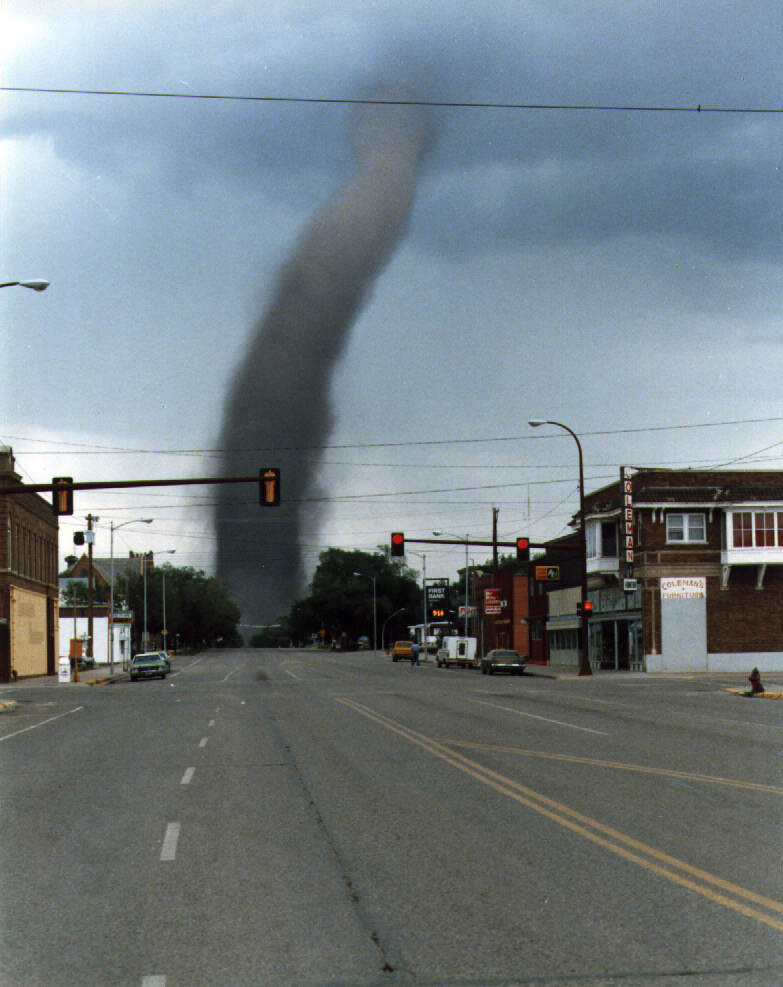

Tornadoes, parasites, earthquakes, viruses, floods, flesh-eating bacteria- these are all part of nature, too. Not exactly what comes to mind when I hear "God's creation," but there you have it.
It begs the question, ought we embrace the repellent side of nature? As squishy, soft-skinned mammals, we're naturally averse to things like, say, the AIDS virus. Or being burned alive in a volcanic eruption. Or sucked into a black hole.
A few months ago, I read something funny on an Atheist website, in an article about neo-Pagan Earth religions.
"Wiccans, though generally more tolerable than Judeo-Christians, are just as happy to be sucked away by a hurricane, praising the gods and thanking the Goddess for the opportunity."Seriously though, when we thank God for the gift of Creation, do we really mean all of Creation? Aren't we, as squishy soft-skinned mammals, guilty of picking and choosing?
In the collective thought of the Christian think-tank, there are a few answers/opinions which come to mind.
One is of the ultra-liberal revisionist John S. Spong. That is, that there is no loving theistic Creator God watching out for us, that nature is in fact cruel, and that God is better understood as the impersonal Force which comes from harmonious interpersonal relationships. Jesus was a very nice person. (If he was real.)
If that's true, I'm going to be so pissed. Because it means I've been worshiping a 2,000 year old corpse, and taking moral cues from an outdated work of fiction. Quite frankly, I'd get more out of staying home on Sunday morning and watching Star Wars. It has better special effects than the Bible, and Chewbacca is way cooler than King Solomon.
On the other hand, we've got the colonial imperialist thinking of the 17th - 19th centuries. (Also Ann Coulter.) That is, that humanity is superior to nature and as such, it is our birthright - nay, duty - to rape and pillage the earth for all its worth. To subdue all inferior creatures and races beneath our mighty sword. I don't buy that either.
So, where does that leave us? How do we understand God, through the lens of God's creation? Even the less desirable aspects of that creation? What do you think?
Tuesday, March 04, 2008
Life: The Living Icon
"Every day is a special day, every place is a special place as it is."
-Bernie Glassman
-Bernie Glassman
We have this notion that certain things, relics, people, places - are holy. Notre Dame, most would probably agree, is more sacred than the ladies' room of an interstate gas station.
Really?
If God is truly omnipresent, then isn't every place, as part of Creation, sacred in some way?
Wasn't God birthed into the world surrounded by dirty, smelly animals in a barn? Isn't that basically the biblical equivalent of a truck stop bathroom? To compare the two seems like borderline sacrilege. But scripture is full of God working in filthy, lowly, unworthy places, and through filthy, lowly, unworthy people. Even a toilet seat bears beneath its white, porcelain exterior the stamp of divine craftsmanship.
Contemplate that.
On the other hand, there exists a paradox. Some places are, in fact, more holy than others, because we, as communities, have channeled divine communion - the loving connection between two or more people - into them, consecrating them as sacred, as special.
When two people fall in love beneath a certain cherry tree, that tree becomes sacred for them. It absorbs and holds and protects the memory of that moment. In turn, it too gives something of itself to that memory.
A long time ago, there was a certain man condemned to die. At his final meal, he told his friends to hold and protect the memory of that moment. And so they did. And it was holy.
So, accept that there are moments of particular holiness, although everything is and has the potential to be holy. It'll drive you nuts.
We place icons of holy moments in our scared spaces, along with images of Jesus and the Saints and martyrs and angels...But when we're out in the world, who are the Saints and martyrs? Who is Jesus? Anyone. Everyone.
What would the world look like if we saw all moments as icons? All people as divine creations?


Every now and then, stop.
Look at your surroundings, the
people around you, and admire the work
of the artist.
Look at your surroundings, the
people around you, and admire the work
of the artist.
Thursday, September 13, 2007
Bad Theology 101
"Jesus is coming back soon to slay the wicked and remove the righteous from the earth before he destroys it"
"This is all part of God's plan for your life"
"Heaven helps those that help themselves"
"If you do something for God, God will do something for you"
"If you don't believe in Jesus, you're going straight to hell"
"Hell is a place of fire and brimstone, of eternal torment"
"God kills the wicked"
"The Bible is also a history, biology, chemistry, astronomy, physics, and geology textbook"
"God says it, I believe it, that settles it"
"Give your life to Christ and God will take away all your burdens"
"Religion is a comfort crutch for the weak-minded, a pre-conceived paradigm to make decisions more easily"
(If it makes your life easier, you ain't doin' it right.)
"This is all part of God's plan for your life"
"Heaven helps those that help themselves"
"If you do something for God, God will do something for you"
"If you don't believe in Jesus, you're going straight to hell"
"Hell is a place of fire and brimstone, of eternal torment"
"God kills the wicked"
"The Bible is also a history, biology, chemistry, astronomy, physics, and geology textbook"
"God says it, I believe it, that settles it"
"Give your life to Christ and God will take away all your burdens"
"Religion is a comfort crutch for the weak-minded, a pre-conceived paradigm to make decisions more easily"
(If it makes your life easier, you ain't doin' it right.)
Subscribe to:
Posts (Atom)


